Key Takeaways
- Protein powder is the fastest-growing dietary supplement category, driven by rising awareness of protein's role in muscle, immune, and metabolic health.
- Whey and casein are complete, high-quality proteins. Whey is digested relatively quickly and is rich in leucine, while casein is digested more slowly and provides a more prolonged release of amino acids.
- Soy protein isolate and pea-protein products are among the highest-quality plant-based options, although amino acid content and digestibility vary by formulation.
- Collagen and bone broth proteins are incomplete because they provide little or no tryptophan. They can still contribute useful amino acids when consumed as part of a varied diet that supplies all essential amino acids.
- A typical protein-powder serving supplies 20–30 g of protein. The right amount depends on total dietary intake, body size, age, activity level, and health goals.
- Independent testing is especially valuable for protein powders because contaminant levels can vary with the raw material, growing region, and manufacturing process.
- People with chronic kidney disease—including those who also have diabetes—should follow an individualized protein target established with their healthcare professional rather than automatically increasing intake.
- Whether to supplement protein intake depends on your baseline diet: if meals already meet your protein needs, powder mainly adds convenience.
Protein provides the amino acids used to build and maintain muscle, skin, hair, nails, connective tissue, enzymes, hormones, and immune proteins. Adequate intake also supports recovery, healthy aging, satiety, and metabolic function. With dairy, egg, collagen, and numerous plant-based options available, choosing a protein powder starts with understanding protein quality, digestibility, dietary preferences, and the purpose for using it.
Why Protein Quality Matters
Protein sources differ in their essential amino acid content and digestibility. Two concepts help explain those differences.
A complete protein supplies all nine essential amino acids in adequate proportions. Most animal proteins are complete, but collagen peptides and bone broth protein provide little or no tryptophan and are therefore incomplete on their own. Plant proteins vary; eating a variety of legumes, grains, nuts, and seeds—or using complementary protein blends—helps provide a balanced amino acid profile.
Protein quality is commonly described using the Protein Digestibility Corrected Amino Acid Score (PDCAAS), which considers amino acid composition and digestibility.
Protein Digestibility Corrected Amino Acid Score from 0 (lowest) to 1 (highest):
Protein Source
| PDCAAS Score |
|---|
Whey, milk, egg (animal) | 1.0 |
Soy protein isolate | 0.98 |
Pea protein concentrate | 0.92 |
Spirulina powder | 0.91 |
Pumpkin seed protein | 0.90 |
Rice, sunflower seed, flax, chia, hemp | 0.6–0.7 |
Collagen / bone broth (alone) | 0 (adjusted ~1.0–1.2 in a mixed diet) |
Collagen and bone broth protein score zero in isolation because they contain virtually no tryptophan, but when eaten as part of a typical varied diet, their adjusted PDCAAS rises to roughly 1.0–1.2. The same logic protects plant-based eaters: a diet built on a variety of legumes, whole grains, nuts, and seeds is very unlikely to leave any single essential amino acid deficient even without hitting a 1.0 score on any single ingredient.
How Much Protein Do You Actually Need?
The Recommended Dietary Allowance (RDA) for protein is 0.36 g per pound (0.8 g per kg) of body weight, about 55 g/day for someone at 150 lb (68 kg).
That baseline covers general health, but several groups need more, typically 1.2–2.2 g/kg/day: people engaged in intense strength or endurance training, adolescents and pregnant or lactating women (due to growth demands), and older adults working to support age-related muscle maintenance. Active vegans should also aim toward the higher end of that range, roughly 1.2 g/kg/day, since plant proteins are generally somewhat less efficiently utilized than animal sources.
Practical protein powder targets:
- General health, adequate diet already: one 20 g serving daily
- Moderate strength or endurance training: 20–40 g daily
- Intense training or muscle-building goals: 20–40 g, twice daily, working toward ~1.5 g/kg body weight total daily protein
More is not automatically better. Once protein needs are met, additional scoops are unlikely to add further benefit and may displace fiber-rich and micronutrient-rich foods. High protein intakes are generally well tolerated by healthy adults, but people with kidney or liver disease should use individualized targets.
Should You Add a Protein Powder Supplement?
Protein powder can be useful when whole-food intake falls short—during weight loss, aging, demanding training, travel, illness recovery, or especially busy periods. It should complement, not routinely replace, nutrient-dense foods.
Weight Management and Satiety
Protein raises satiety hormones and lowers hunger-signaling hormones, which is why higher-protein meals tend to reduce total calorie intake over a day. Research shows satiety response is similar whether a single serving is 20 g or 80 g; more isn't automatically better. Hitting a consistent daily target matters far more than maximizing any one dose.
Muscle Repair and Recovery
Resistance and endurance exercise increase the need for muscle repair and remodeling. Protein does not replace training, but adequate intake supplies the essential amino acids needed to support recovery and adaptation.
Convenience Without the Guesswork
A shake can provide a convenient serving of protein when preparing a meal is impractical. Protein powder can also be added to oatmeal, yogurt, or smoothies. Think of it as a tool for consistency rather than a replacement for a varied diet.
What to Check on the Label
Look for products that disclose protein content clearly and use independent testing for identity, potency, and contaminants such as heavy metals. Contaminant levels depend on the raw material and its origin; neither plant- nor animal-based powders are automatically cleaner.
Consult a healthcare professional before routinely adding protein powder if you have kidney or liver disease, are pregnant or breastfeeding, or have complex metabolic or medical needs.
Whey Protein Powder
Whey is the most popular protein powder supplement and a natural by-product of cheese-making. Cow's milk is about 6.25% protein: 80% casein, 20% whey. When cheese is made, casein forms the curd, and whey remains in the liquid; whey protein powder is produced by filtering lactose, fats, and minerals out of that liquid.
Whey comes in two primary forms:
- Whey Protein Concentrate (WPC): varies in protein concentration; products commonly used in supplements often provide approximately 70%–80% protein and retain more lactose and fat than isolates.
- Whey Protein Isolate (WPI): more extensively filtered and typically at least 90% protein, with very little lactose or fat.
Whey is a complete protein with the highest concentrations of glutamine and branched-chain amino acids (BCAAs) found in nature, both central to cellular health, muscle growth, and protein synthesis. It's also soluble, easy to digest, and efficiently absorbed, which is why it's the default choice post-workout.
Documented benefits include improved muscle mass and strength when paired with resistance training, better satiety and blood sugar regulation, and, in some countries, formal recognition as a functional food for maintaining muscle mass and supporting cardiovascular health.3-6
Casein and Other Milk Proteins
Casein makes up 80% of the protein in cow's milk and, like whey, is a complete, high-quality protein. It's less popular than whey mainly because it mixes less smoothly into liquids and costs somewhat more, but it supports muscle recovery just as effectively. The key functional difference is speed: casein digests and is absorbed slowly, which makes it a better fit for sustained overnight muscle repair than for an immediate post-workout boost.
Milk protein isolate contains both casein and whey, made from fresh milk via low-heat, non-chemical filtration that preserves the proteins' structure.7 It may be lactose-free or contain trace lactose and mixes well in smoothies and other applications.
Egg White Protein Powder
Egg white protein (albumin) is the dried, powdered form of chicken egg whites, a complete protein that digests at a moderate rate, between fast-digesting whey and slow-digesting casein. It's completely dairy- and lactose-free, making it a reliable option for anyone with a dairy allergy or intolerance.
Collagen and Bone Broth Protein
Collagen peptides and bone broth protein are among the fastest-growing protein categories on the market.
Bone broth protein is produced by simmering animal bones (chicken, beef, or fish) into broth, concentrating it, and dehydrating it into powder, commonly used in savory cooking or as a broth base, though it also works in smoothies. Collagen peptides are collagen that's been partially broken down for better bioavailability, sourced from the same animal categories.
Collagen is the most abundant protein in the human body and the main structural protein in skin, hair, nails, joints, and the gastrointestinal lining. Clinical research on collagen peptide supplementation (typically 2.5–10 g/day) has shown measurable benefits for skin elasticity and wrinkle reduction, nail growth and strength, joint comfort, bone density, and gut-lining integrity.8-10
Plant-Based Protein Powders
The plant-based protein market has expanded well beyond the original soy and rice options, driven by demand and relative affordability. Plant proteins are often blended together specifically to offset each ingredient's individual amino acid gaps and produce a more complete profile.11,12
Pea Protein
Pea protein is a popular vegan option. It provides all essential amino acids but is relatively low in methionine and typically contains less leucine than whey. Studies suggest it can support muscle adaptation when consumed in an adequate dose and paired with resistance training.11
Soy Protein Isolate
Soy protein isolate is approximately 90% protein and is a complete plant protein. Soy protein has been studied extensively for supporting healthy cholesterol levels and cardiovascular health. Naturally occurring soy isoflavones may also support bone health, particularly after menopause.13
Spirulina Powder
Spirulina is a nutrient-dense blue-green cyanobacterium that is approximately 60% protein by dry weight and also supplies pigments and micronutrients. Because typical servings are small, it is better viewed as a concentrated whole-food supplement than as a primary protein source. Preliminary research suggests antioxidant and exercise-recovery benefits, but the evidence is less extensive than for conventional protein powders.14,15
Pumpkin Seed Protein
Pumpkin seed protein is gaining ground as a "clean," pleasant-tasting whole-food protein, roughly 60% protein, rich in fiber, vitamins, minerals, and phytochemicals. Like pea protein, it's relatively low in methionine and pairs well with flax, sunflower, or chia protein.
Brown Rice Protein
Brown rice protein is hypoallergenic and common in detox and elimination-diet formulas. It's incomplete on its own, low in lysine, and is typically combined with pea protein to form a complete amino acid profile.
Other Plant-Based Options
Chia, flaxseed, hemp, sunflower, and sacha inchi proteins generally run around 60% protein with an earthy, nutty flavor many people prefer. Each tends to run lower in at least one essential amino acid (most often lysine), but as with any plant-based approach, a diet built on a variety of protein sources makes an actual deficiency unlikely.
Health Benefits of Protein Powder at a Glance
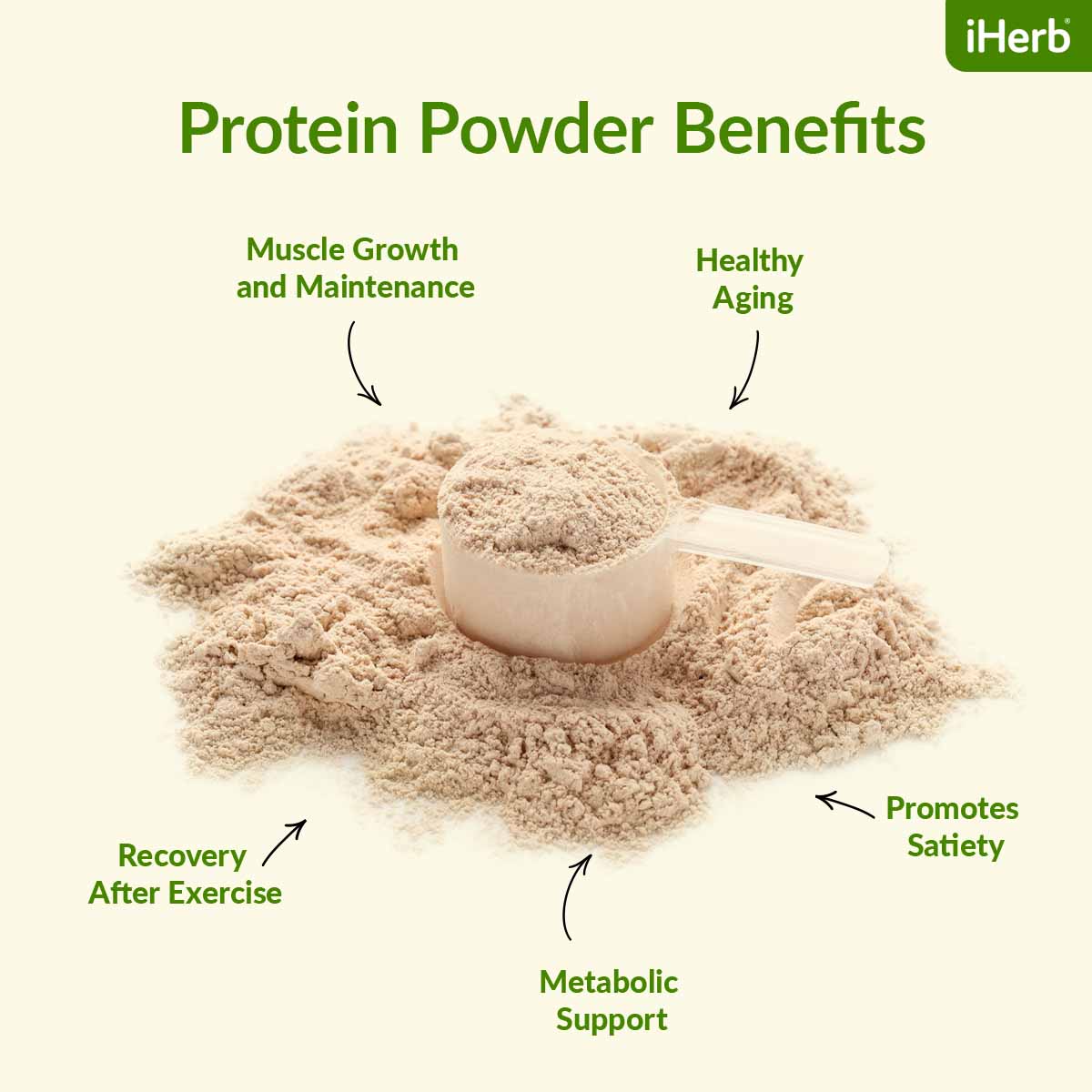
Beyond the type-by-type breakdown above, protein powder supplementation supports five specific health goals:
- Muscle Growth and Maintenance: Supplies essential amino acids for muscle protein synthesis and may help preserve lean mass during aging or calorie restriction, especially when paired with resistance training.
- Healthy Aging: Adequate complete protein supports muscle and physical function; specific collagen peptides may additionally support skin and joint health.
- Recovery After Exercise: Supports muscle repair and adaptation after resistance or endurance exercise.
- Weight Management: Can increase satiety and help preserve lean mass during a calorie deficit.
- Metabolic Support: Protein-rich meals may support satiety and a healthy post-meal glucose response. Whey has been studied most extensively for these effects.4-6
Interactions & Precautions
Protein powder is generally well tolerated, but a few groups should check with a healthcare professional before adding it to a daily routine:
- Diabetes and chronic kidney disease (CKD): It is often recommended that people managing both conditions keep protein intake near the RDA of 0.8 g/kg/day and avoid pushing past roughly 1.3 g/kg/day, since higher intakes have been associated with faster kidney function decline. This is a dietary total, not a powder-specific limit, but a daily shake on top of a normal diet can push total intake over that line without anyone noticing.
- Kidney or liver disease generally: the body cannot store excess protein, and processing more than it needs adds an ongoing load on both organs.
- Pregnancy and breastfeeding: Choose products with simple ingredient lists and credible contaminant testing, and avoid added herbs, stimulants, sweeteners, or high-dose nutrients.
- Dairy allergy or lactose intolerance: Milk-derived proteins are unsuitable for people with a milk-protein allergy. Many whey isolates contain very little lactose and may be tolerated by some people with lactose intolerance, but tolerance varies. Egg, soy, and other plant proteins must also be avoided when the corresponding allergy is present.
For most healthy adults, the key considerations are total daily intake, ingredient quality, digestive tolerance, and how well the powder fits the overall diet.
How to Build a Protein-Rich Smoothie
Step 1: Choose a powder and serving size that supplies enough protein to fill your dietary gap—commonly 20–30 g of protein.
Step 2: Choose your base liquid (12–16 oz for a standard 16 oz smoothie):
- Plant-based milk (almond, oat, coconut)
- Milk or kefir
- Filtered water
- Tomato, celery, or carrot juice for a savory version
Step 3: Choose your featured ingredients (1–2 cups):
- Fresh or frozen berries, chopped apple, coconut chunks, pineapple, mango, kale or spinach
- Savory: bell peppers, beets, celery
Step 4: Nutritional boosts (1 tsp–1 tbsp): acai, raw cacao, goji, spirulina, chlorella, wheatgrass, ginger, turmeric, or cinnamon
Three quick recipes (each: 8–12 oz milk of choice + 20–30 g protein powder):
- Berry Smoothie: 1 cup frozen mixed berries
- Apple-Cinnamon Smoothie: 1 chopped red apple + ¼–½ tsp cinnamon
- Strawberry Banana Smoothie: ½ cup strawberries + ½ cup frozen banana
Frequently Asked Questions
Is bone broth protein a complete protein?
No, not on its own. Bone broth protein generally contains little or no tryptophan, so it is incomplete and should not be used as the sole protein source. It can still contribute useful amino acids within a varied diet that supplies all essential amino acids.2
What is the PDCAAS score of protein powder, and which types score highest?
PDCAAS estimates protein quality from essential-amino-acid content and digestibility, with scores conventionally capped at 1.0. Whey, milk, egg, and soy isolate can reach or approach 1.0. Values for plant proteins vary with the source and processing, so small numerical differences should not be interpreted as a definitive ranking.
What are good vegan protein powder sources?
Soy and pea proteins are strong standalone choices. Blends such as pea plus rice can improve amino acid balance, while seed-based proteins can add variety, fiber, and phytochemicals. Choose a product that provides an effective amount of protein per serving and fits your dietary needs.
What food has the most protein, animal- or plant-based?
Animal proteins generally provide all essential amino acids in proportions well suited to human needs. Soy is also a complete protein, and thoughtfully blended plant proteins can provide comparable nutritional value when total intake is adequate.
Is whey protein safe to take every day?
For most healthy adults, yes, within the daily targets outlined above (20 g for general health, up to 40 g twice daily for intense training). People with kidney or liver conditions, or diabetes with chronic kidney disease, should confirm their total daily protein target with a healthcare professional first.
References:
- Grand View Research. Protein Supplements Market Size, Share & Trends Analysis Report. Accessed September 18, 2026.
- Paul C, Leser S, Oesser S. Significant amounts of functional collagen peptides can be incorporated in the diet while maintaining indispensable amino acid balance. Nutrients. 2019;11(5):1079.
- Li M, Liu F. Effect of whey protein supplementation during resistance training sessions on body mass and muscular strength: a meta-analysis. Food Funct. 2019;10(5):2766-2773.
- Giglio BMP, Lobo PCB, Pimentel GD. Effects of whey protein supplementation on adiposity, body weight, and glycemic parameters: a synthesis of evidence. Nutr Metab Cardiovasc Dis. 2023;33(2):258-274.
- Nouri M, Pourghassem Gargari B, Tajfar P, Tarighat-Esfanjani A. A systematic review of whey protein supplementation effects on human glycemic control. Diabetes Metab Syndr. 2022;16(7):102540.
- Lesgards JF. Benefits of whey proteins on type 2 diabetes mellitus parameters and prevention of cardiovascular diseases. Nutrients. 2023;15(5):1294.
- Huang LP, Condello G, Kuo CH. Effects of milk protein in resistance training-induced lean mass gains for older adults aged 60 years or older: a systematic review and meta-analysis. Nutrients. 2021;13(8):2815.
- Bongers CCWG, Ten Haaf DSM, Catoire M, et al. Effectiveness of collagen supplementation on pain scores in healthy individuals with self-reported knee pain: a randomized controlled trial. Appl Physiol Nutr Metab. 2020;45(7):793-800.
- Evans M, Lewis ED, Zakaria N, Pelipyagina T, Guthrie N. A randomized, triple-blind, placebo-controlled study evaluating freshwater marine collagen for skin wrinkles and elasticity. J Cosmet Dermatol. 2021;20(3):825-834.
- Hexsel D, Zague V, Schunck M, et al. Oral supplementation with specific bioactive collagen peptides improves nail growth and reduces symptoms of brittle nails. J Cosmet Dermatol. 2017;16(4):520-526.
- Kerksick CM, Jagim A, Hagele A, Jäger R. Plant proteins and exercise: what role can plant proteins have in promoting adaptations to exercise? Nutrients. 2021;13(6):1962.
- Ahnen RT, Jonnalagadda SS, Slavin JL. Role of plant protein in nutrition, wellness, and health. Nutr Rev. 2019;77(11):735-747.
- Xiao CW. Health effects of soy protein and isoflavones in humans. J Nutr. 2008;138(6):1244S-1249S.
- Lafarga T, Fernández-Sevilla JM, González-López C, Acién-Fernández FG. Spirulina for the food and functional food industries. Food Res Int. 2020;137:109356.
- Lu HK, Hsieh CC, Hsu JJ, Yang YK, Chou HN. Preventive effects of Spirulina platensis on skeletal muscle damage under exercise-induced oxidative stress. Eur J Appl Physiol. 2006;98(2):220-226.
- Kidney Disease: Improving Global Outcomes Diabetes Work Group. KDIGO 2022 clinical practice guideline for diabetes management in chronic kidney disease. Kidney Int. 2022;102(5S):S1-S127.
- American Diabetes Association. Chronic kidney disease and risk management: Standards of Care in Diabetes—2026. Diabetes Care. 2026;49(suppl 1):S246-S262.
- de Boer IH, Khunti K, Sadusky T, et al. Diabetes management in chronic kidney disease: a consensus report by the American Diabetes Association and Kidney Disease: Improving Global Outcomes. Diabetes Care. 2022;45(12):3075-3090.
DISCLAIMER:
These statements have not been approved by the Food and Drug Administration. These products are not intended to diagnose, treat, cure, or prevent disease.

























































 Table of Contents